NetEqualizer News: July 2014


July 2014

Greetings!

Enjoy another issue of NetEqualizer News! This month, we give you an old school NetEqualizer tip, discuss our Hotel and Resorts offerings, and announce our FlyAway Contest winner. As always, feel free to pass this along to others who might be interested in NetEqualizer News.

A message from Art…
Art Reisman, CTO – APconnections

Every summer I try to camp at least once in a National Park. Living in Boulder, Colorado, I am closest to Rocky Mountain National Park, and so that is an easy destination. Over the 4th of July holiday weekend, I spent a night camping there.art_canoe_picture

I could not really get cell or Internet service in the park boundaries. However, I understand that our friends at Global Gossip are working to pull a link up to the busy shop and restaurant on top of trail ridge road at this time. The good news is many of the other National Parks out in the west are supported by Global Gossip and a NetEqualizer system to boost service in their lodging and services area.

This month we profile Sam Beskur of Global Gossip. Over the last 3 years, Global Gossip has rolled out NetEqualizers to campsites and resorts at many U.S. National Parks, including Yellowstone, the Grand Canyon, Crater Lake, Death Valley and Mount Rushmore National Memorial and coming soon to Yosemite

Maybe next year Rocky Mountain National Park will have a NetEqualizer. Otherwise, I am in for a road trip!

We love it when we hear back from you – so if you have a story you would like to share with us of how we have helped you, let us know. Email me directly at art@netequalizer.com. I would love to hear from you!

Old School NetEqualizer Tip – Keeping Track of Total Usage Per Device by MAC Address

Because our 8.1 Release with the updated graphing and longer-term reporting is not quite ready for release, we won’t do another teaser on this release – we did that last month.

So in keeping with that promise, whatever you do, don’t click on these links below, because it will just make you envious of what is coming out next month…

1) General traffic through the device:

http://prntscr.com/3y0br9

2) Traffic reports for an IP address:

http://prntscr.com/40hvql

http://prntscr.com/40hvzz

So instead of showing off the report graphics for the new release (assuming you did not click any of those links), we have decided to go back in time, back to our open source days, and re-visit the days when I would release cool back door tricks for enhancing your NetEqualizer. This month we offer a script, for all our early adopters to enjoy!

Note: this script is for those who like to get their hands dirty. It is not officially supported under NSS.

For those of you that would like to keep track of total usage per visible device – you can now do that! My Total Usage by MAC address Script can be adapted to do this in your environment.Just save the script to a file, make it executable, and start it up. The script keeps track of total byte counts for all visible MAC addresses.

Once Release 8.1 reaches GA, these features will be free to customers with valid NetEqualizer Software and Support who are running version 7.5+. If you are not current with NSS, contact us today!

sales@apconnections.net

-or-

303-997-1300


Spotlight: HMSIO and Sam Beskur of Global Gossip

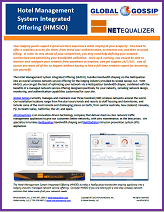
This month we profile Sam Beskur of Global Gossip, and our joint offering, which we first introduced last summer, the Hotel Management System Integrated Offering (HMSIO).

Global Gossip has been developing network and communication solutions since 1999 and currently manages and maintains over 300 wired and wireless access networks globally. Their locations span seven countries, and include remote and bandwidth challenged sites, such as the central Australian desert! Global Gossip has offices in Denver, Colorado; Sydney, Australia; and London, England.

Sam is Director and Senior Software Engineer at Global Gossip, which basically means that he can (and does) get involved in designing network architectures and implementation efforts. In addition, Sam heads up Global Gossip’s North American Operations. Sam has been with Global Gossip for over 10 years, with stints both in Australia (their home office) and the U.S.

Sam found NetEqualizer over 3 years ago. Once Sam saw how equalizing helped to resolve congestion issues at his initial site, he spearheaded rolling out NetEqualizers as part of their network architecture for all new implementations.

It has been a whirlwind since then – the NetEqualizer is at campsites and resorts at many U.S. National Parks, including Yellowstone, the Grand Canyon, Crater Lake, Death Valley, Mount Rushmore National Memorial, and (coming soon!) to Yosemite.

Global Gossip has deep experience delivering guest Internet solutions including full property management system integration to some of the leading hospitality providers worldwide. They have established a strong partnership with Xanterra in the US, rolling out full Wireless Internet solutions to more than 2000 rooms and 4000 staff in the hotels and resorts within Yellowstone National Park, Death Valley and the Grand Canyon.

Last summer we partnered with Global Gossip to roll out our Hotel Management System Integrated Offering (HMSIO), which gives our lodging customers the opportunity to benefit from Global Gossip’s expertise.

If you would like to learn more about HMSIO, contact us at:

sales@apconnections.net

-or-

303-997-1300


NetEqualizer Summary Guide for Hotels and Resorts

Summer is high season to take a vacation, and relax at a nice hotel or fancy resort. So, we thought it was the perfect time to update our Hotels & Resorts Guide! If you are in the hospitality industry and are considering a NetEqualizer, you may want to review our updated guide.unnamed1unnamed

This short guide is focused on issues specific to the hospitality industry and explains how the NetEqualizer is used by our hotel and resort customers to address these common issues.

This is a quick way to learn about how the NetEqualizer might apply to your environment.

And if you would like to outsource your Internet offering to a network managed services provider, you may also want to check out our Hotel Management System Integrated Offering (HMSIO), which is offered jointly with Global Gossip, profiled above in this newsletter.

If you are a current hospitality industry customer, this guide and is a great read to optimize your NetEqualizer configuration. Take a look to see if there are features that you might not be using and want to take advantage of in your NetEqualizer installation.

We would be happy to help you with your configuration. If you are current on NetEqualizer Software and Support, contact:

support@apconnections.net

to get help optimizing your NetEqualizer.


And the FlyAway Contest Winner Is…

Every few months, we have a drawing to give away two round-trip domestic airline tickets from Frontier Airlines to one lucky person who’s recently tried out our online NetEqualizer demo.

The time has come to announce this round’s winner.40

And the winner is…

Mark Parry at Wifinity!

Congratulations, Mark!

Please contact us within 30 days (by August 22, 2014) at:

admin@apconnections.net

-or-

303-997-1300

to claim your prize!


Best Of The Blog

QoS over the Internet – Is it Possible? Five Must-Know Facts

By Art Reisman – CTO – APconnections

I had an inquiry from a potential customer yesterday asking if we could monitor their QoS. I was a bit miffed as to what to tell them. At first, the question struck me as if they’d asked if we can monitor electrons on their power grid. In other words, it was a legitimate question in a sense, but of what use would it be to monitor QoS? I then asked him why he had implemented QoS in the first place. How did he know he needed it…

Photo Of The Month
 IMG_0438
Moose at Rocky Mountain National Park
During Art’s holiday trip to Rocky Mountain National Park, he spotted this moose running through his camp! He was able to snag a pretty good picture of these amazing animals.

15 Years to Cross the Technology Chasm ?


Final Jeopardy Answer

Fat Pipe/Thin Client, E-mail, VoIP, Equalizing

And the Question is…

What are  some recent technologies that took a minimum 15 years to cross the chasm from initial viability to widespread commercial acceptance?

Being old allows me to recall, with some historical perspective, the  timeframe it takes for a technology to make it  from production prototype into the mainstream. It is usually much longer than I have patience for. Today, when I see a technology emerging that is obviously superior to what the world is using , I always expect the adoption to take a few weeks.  When in reality, 50 years is close to the historical norm, and 15 years is light-speed for a product to go from concept to societal norm.

For example, Refrigeration and Commercial Air Travel took  50+ years to cross the chasm.  And I am not talking about from the crude idea stage to reality, but rather from the time frame of a working prototype, to wide-spread acceptance.  It was about fifty years from that first, stable airplane, to regular commercial air travel of the late 1950’s.  I should be happy that many of  the world’s technologies are maturing in 15 years, right?

From my historical observations, and a bit of Wikipedia (http://www.wikipedia.org/), lazy man research, here are some  recently completed 15 year chasm crossings.

  • Before Cloud Computing we had, Fat Pipe/Thin Clients.

    This was all the rage of a key note speech by an Apple exec back in 1999 at a wireless conference in San Jose. I remember the speech well, as the exec spent the first 15 minutes making fun of Microsoft and their crotchety cumbersome desktop market. Now, 15 years later we can officially say that cloud computing has overtaken the bloated desktop computer, and small thin devices are the norm to connect with.

  • E-mail has always been around? 

    Well it did not take off until the late 90’s, more than 15 years after its wide use in the educational system. Yes, some early adopters had AOL dial-up accounts with e-mail,  but even as late as 1995 , voice mail was the dominant player for receiving non real-time messages.  I remember this because I worked for a company that was in the voice messaging Business (their logo looks like the Star War’s death star), and we were basically ignoring the e-mail market, and rolling out a major voice mail product release with huge expectations as late as 1995.  Yes, we were pushing other forms of communications – Lotus Notes was a big player then also, but E-mail hit that acceptance curve somewhere in the late 90’s to early 2000’s.

  • VoIP PBX

    Also at that same company, in the early 90’s we thought VoIP was the greatest thing since sliced bread. And we were making quality PBX’s that supported VoIP in the early 90’s.  In this case there was plenty of natural resistance to acceptance.

  1. The economic cash cow of embedded PBX’s pushed VoIP systems life-span out a few years.
  2. There was also just fear of using a new technology for something as important as an enterprise phone system. I would estimate that VoIP PBX’s started to outnumber the legacy installed base around 2005 or perhaps later.
  • NetEqualizer

    Equalizing technology for reigning in bandwidth abuse has always been superior to Layer 7 shaping, which incidentally rose up from 1995 to 2000 in just 5 years.  Equalizing has taken 15 years and is still on a linear acceptance curve.  There are several reasons for this:

1) The Equalizing concept crossed a chasm from traditional thinking of intuitive, hands-on control and moved to a heuristic approach which is not always obvious to the non-technical decision maker.

2) The graph below depicts how transit Bandwidth prices have dropped exponentially in the past 15 years. This has squeezed out the more expensive devices in the market , and slowed the need a bit at the NetEqualizer price point.

 
Year Internet Transit Prices (in Mbps, min commit) % Decline
1998
$1200
per Mbps
1999
$800
per Mbps 33%
2000
$675
per Mbps 16%
2001
$400
per Mbps 40%
2002
$200
per Mbps 50%
2003
$120
per Mbps 40%
2004
$90
per Mbps 25%
2005
$75
per Mbps 17%
2006
$50
per Mbps 33%
2007
$25
per Mbps 50%
2008
$12
per Mbps 52%
2009
$9.00
per Mbps 25%
2010
$5.00
per Mbps 44%
2011
$3.25
per Mbps 35%
2012
$2.34
per Mbps 28%
2013
$1.57
per Mbps 33%
2014
$0.94
per Mbps 40%
2015
$0.63
per Mbps 33%
Source: DrPeering.net

3)  NetEqualizer has stayed with a direct sales channel for the most part. The land-grab mentality of investing in a worldwide sales channel and going fast looks impressive but, with dropping bandwidth prices in some markets, is not a sustainable model due to the channel costs.

 So what will come to maturity 15 years from now ?

In my opinion the following technologies will have crossed the chasm in 2029:

1) Automobiles with standard braking sensors to avoid collisions will be the norm in 15 years.

2) Drones everywhere for anything traveling quickly that is not a human.  But I think the widespread commercial use will be 20+ years out.

3) House automation. You won’t be flipping switches to turn anything on or off in 15 years in a new house.

What are your predictions for 15 years out?

NetEqualizer News: June 2014


June 2014

Greetings!

Enjoy another issue of NetEqualizer News! This month, we preview our exciting Release 8.1 (Enhanced RTR), highlight one of our resellers in South Africa (Cybersmart), and show off our updated Libraries Guide. As always, feel free to pass this along to others who might be interested in NetEqualizer News.

A message from Zack…
Zack Sanders, Network Engineer – APconnections


On Memorial Day (May 26th this year), 50,000 people descend upon Boulder, Colorado to run the BolderBoulder 10K race. Anyone can run the race, and some walk it as well. However, to get your best times (a PR, or “personal record”), I find that I need to develop a training plan and start training about two months before the race. This is always a big commitment for me mentally and physically, but I find it pays off in the end. This year I ran in 53 minutes, beating my goal time by 1 minute.  303809_10100390274244183_885235222_n

As an engineer on our Dynamic Real-Time Reporting tool, I find that I use this same skill to plan & execute my development work. I am happy to say that our Release 8.1 (Enhanced RTR) is on track for a late summer/early fall roll-out. You will see some of the initial screenshots below. We are very excited with how it is turning out.We love it when we hear back from you – so if you have a story you would like to share with us of how we have helped you, let us know. Email me directly at zack@netequalizer.com. I would love to hear from you!

Sneak Peek at Release 8.1 (Enhanced RTR)

We are very excited to announce Release 8.1 (Enhanced RTR) – coming in late summer/early fall of this year! This release is special because it includes a new version of our popular Dynamic Real-Time Reporting (RTR) tool. The original RTR provided some basic functionality and served as a test to discover what our customers truly needed in a reporting feature. You gave us feedback, and we listened!

The new RTR tool enhances the features and capabilities of the existing RTR in many ways. Here are just a few:

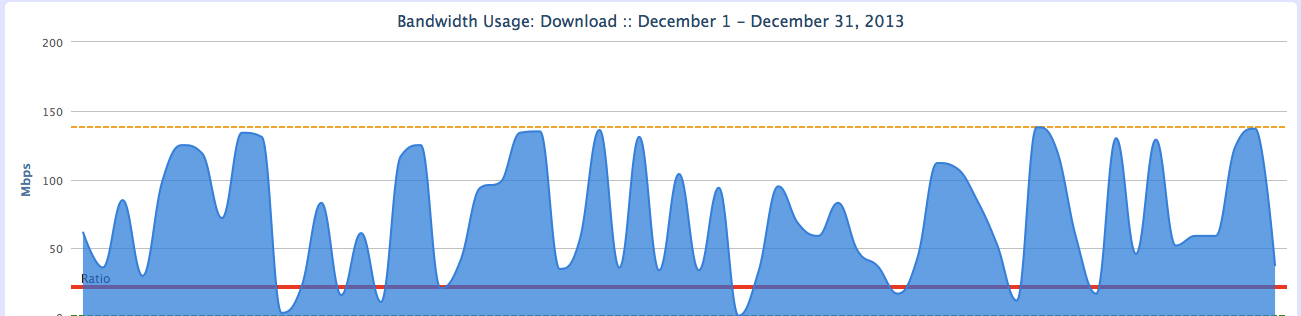
1) New and improved graphing: We’ve added things like timestamps to the graph’s x-axis, a smart down-sampler in order to quickly graph up to 4 weeks of data, and the ability to show both upload and download bandwidth usage on the same graph.

2) Improved menu design with new graphs: We’ve created a new user interface with more intuitive pages and the ability to graph more data. For example, with the new RTR tool, you can graph bandwidth usage for individual IP addresses, subnets, pools, and VLAN’s.

3) Penalty graphs over time: We have a new graph which shows the number of penalties over time – allowing you to correlate bandwidth trends with penalties.

Over the next two months, we’ll be stress and load testing this tool to ensure seamless integration with your network and NetEqualizer. Stay tuned to NetEqualizer News for updates on this release!

Once Release 8.1 reaches GA, these features will be free to customers with valid NetEqualizer Software and Support who are running version 7.5+. If you are not current with NSS, contact us today!

sales@apconnections.net

-or-

303-997-1300


Spotlight: Our South African Reseller, Cybersmart

Deep in the heart of Cape Town, South Africa resides the offices of Cybersmart – a company that supplies bandwidth circuits to cities and towns all over the country, ultimately serving tens of thousands of South African citizens. Some of these customers are wireless Internet service providers in remote regions, where bandwidth is still quite expensive.unnamed

Several years ago, they deployed a NetEqualizer on one of  their regional circuits, and at once became true believers in the elegance of the NetEqualizer philosophy and technology. Not only are they our customer, but they have also become our regional distributor in South Africa and neighboring countries – supporting and reselling equipment to regional ISPs and businesses. So, if you are ever in need of a bandwidth circuit, or a NetEqualizer in their region, please give them a call!

In April 2012, Managing Director Laurie Fialkov of Cybersmart issued a press release about its new uncapped ADSL product, which relied on the NetEqualizer as a backbone of its offering.

Portions of the press release are included here:
…The solution which provides Cybersmart with what it needs is a product called NetEqualizer. We were so impressed that we asked for distribution rights for South Africa, which was granted to us,” said Fialkov.

The way this product works, is it keeps track of the top TCP connections on a network. The NetEqualizer rates the connections based on how long the connection has been alive and how fast it is going. It will then slow the ‘top’ connections down so they are not unfairly using the bandwidth,” explains Fialkov. This solution means that business applications which use encryption are not arbitrarily slowed down (as is the case with many shaping solutions).

Fialkov added that the TCP rules will only be enforced during times when the network load is high. “If we are not under peak load then no connections are equalized at all,” said Fialkov.

Fialkov explained that, to be competitive, all ISPs need to oversell bandwidth to end-users – also known as contending bandwidth. What this means is that a certain number of users need to share the same bandwidth. “We are planning on overselling our uncapped product at 15:1 to 20:1, which we believe is a lot better than the current products in the market,” said Fialkov.

Fialkov then pointed out that automatic shaping via the NetEqualizer has ensured a good experience on uncapped accounts.

Cybersmart continues to use their NetEqualizer today, and has sold units across South Africa since mid-2012, based on their success implementing the NetEqualizer in their own business.

If you are in South Africa, and would like to learn more about the NetEqualizer, contact:

Laurie Fialkov at Cybersmart laurie@cybersmart.co.za


NetEqualizer Summary Guide for Libraries

This month we have updated our Libraries Guide. If you are a library and are considering a NetEqualizer, you may want to review our updated guide.unnamed

This short guide is focused on issues specific to Libraries and explains how the NetEqualizer is used by our library customers to address these common issues. This is a quick way to learn about how the NetEqualizer might apply to your environment.

And if you like real-life examples, you may also want to check out our Library Case Study with Washington County Cooperative Library Services. While the write-up is from 2012, the case study is still relevant today.

If you are a current library customer, this guide and case study are a great read to optimize your NetEqualizer configuration.

Take a look to see if there are features that you might not be using and want to take advantage of in your NetEqualizer installation. We would be happy to help you with your configuration.

If you are current on NSS, contact support@apconnections.net to get help optimizing your NetEqualizer.


Best Of The Blog

Is Your Bandwidth Controller Obsolete Technology?

By Art Reisman – CTO – APconnections

Although not free yet, bandwidth contracts have been dropping in cost faster than a bad stock during a recession. With cheaper bandwidth costs, the question often arises on whether or not an enterprise can do without their trusty bandwidth controller.

Below, we have compiled a list of factors that will determine whether or not bandwidth controllers stick around for a while, or go the route of the analog modem, a relic of when people received their Internet From AOL and dial up…

Photo Of The Month
unnamed
Las Vegas Trail Running
Mountain trails are usually not the first thing to come to mind when one thinks about Las Vegas. Though the area is primarily known for gambling and world-class restaurants (among other things), the mountains surrounding the city offer an excellent escape from the concrete jungle and lights. This picture was recently taken on the summit of one of the small hills surrounding the Southern Highlands neighborhood south of The Strip. It was unclear why the flag exists on top.

Is Your Bandwidth Controller Obsolete Technology?


Although not free yet, bandwidth contracts have been dropping in cost faster than a bad stock during a recession.  With cheaper bandwidth costs , the question often arises on whether or not an enterprise can do without their trusty bandwidth controller.

Below, we have compiled a list of factors that will determine whether or not Bandwidth Controllers stick around for a while, or go the route of the analog modem,  a relic of when people received their Internet from AOL and dial up.

  • In Many areas of the world bandwidth prices are still very high. For example most of Africa,  and also Parts of the Middle East  they do not have the infrastructure in  place to deliver high speed low cost circuits . Bandwidth controllers are essential equipment in these regions.
  • Even in countries where bandwidth infrastructure is subsidized, and urban access is relatively cheap,  people like to work and play in remote places. Bandwidth consumers have come to expect bandwidth while choosing to live in a remote village. Many of these lifestyle choices find people far away from the main fiber lines that crisscross the urban landscape. Much like serving fresh seafood in mining camp, providing bandwidth to remote locations,  has a high price, and bandwidth controllers are more essential than ever in the remote areas of developed countries.   For example we are seeing a pick up in NetEqualizer interest in luxury resort hotels on tropical islands, and national parks , where high speed Internet is now a necessity but it is not cheap.
  • Government spending on Internet infrastructure has grown out of favor, at least in the US. After the recent waste and fraud scandals, don’t expect another windfall like the broad band initiative any time soon. Government subsidies were a one time factor in the drop in bandwidth prices during the 2007 to 2010 time frame.
  • As the market matures and providers look to show profit, they will be tempted to raise prices again, especially as demand grows.  The recession of 2007 drove down some commercial demand at a time when there was significant infrastructure increases in capacity, we may be at the tail end of that deflationary bubble.
  • There was also a one time infrastructure enhancement, that gained momentum around 2007, this compounded the deflationary pressure on bandwidth. WDM technology allowed existing fiber to carry up to 16 times the original planned capacity.  We don’t expect any new infrastructure innovations of that magnitude to occur any time soon.  Moore’s law has finally cracked  (proved false) in the computer industry and so will the honeymoon increases in the carrying capacity of fiber.
  • Lastly, the wireless frequencies are crowded beyond capacity and bandwidth is still hard to find here, and operators are running out of tricks.
  • We must concede that we have seen cases where customers are getting bandwidth at such a low cost that they forgo investing in bandwidth controllers, but we expect that trend to flatten out as bandwidth prices hold steady or start to creep back up a bit in the coming decade.

Stay tuned.

Is Layer 7 Shaping Officially Dead ?


Sometimes life throws you a curve ball and you must change directions.

We have some nice color coded pie chart  graphs that show customers percentages of  their bandwidth by application. This feature is popular  really catches their eye.

In an effort to improve our latest layer 7  reporting feature, we have been collecting data from some of our Beta users.

Layer 7 PIe Chart

Layer 7 PIe Chart 

The  accuracy of the Layer 7 data has always and continues to be an issue. Normally this is resolved by revising the layer 7 protocol patterns, which we use internally to identify the signatures of various applications.   We  had anticipated and planned to address accuracy in  a second release. However when we start to look at the root cause as to what is causing the missed classifications, we start to  see more cases of encrypted data. Encrypted data cannot be identified.

We then checked with one of our ISP customers in South Africa , who handles over a million residential users. It seems that some of their investment in Layer 7 classification is also being thwarted by increased encryption. And this is more  than the traditional p2p traffic,  encryption has spread to  the common social services such as face book.

Admittedly some of this early data is anecdotal,  but two independent observers reporting increased encryption is hard to ignore.

Evidently the increased encryption techniques now being used by common applications,  is a back lash to all the security issues bogging down the Internet.  There are workarounds for enterprises that must use layer 7 classification to prioritize traffic; however the workarounds require that all devices using the network must be retrofitted with special software to identify the traffic on the device ( iPad, iPhone). Such a workaround is impractical for an ISP.

The net side effect is, that if this trend continues traditional layer 7 packet shapers will become museum pieces right beside old Atari Games, and giant 3 pound cell phones.

NetEqualizer News: May 2014


May 2014

Greetings!

Enjoy another issue of NetEqualizer News! This month, we preview our new NetEqualizer Cloud Reporting feature, show off our new Internet Providers Guide, and highlight one of our international resellers – Reinaldo Neilla. As always, feel free to pass this along to others who might be interested in NetEqualizer News.

A message from Art…
Art Reisman, CTO – APconnections

I must admit that my head has been in the clouds a lot lately, as I like to bird watch, and the spring migrations are in full swing here in Colorado. I saw two “life birds” this spring (a life bird is the first time you see a bird in the wild) – the Common Yellowthroat Warbler (not common in my part of Colorado!) and a Lesser Goldfinch (only a tiny slice of its range is in Boulder).art_small

I guess staring at all those clouds gave me an idea, which I share with you this month in more detail below. In a nutshell, we can use the cloud to help store longer periods of data for reporting. Read more about our upcoming NetEqualizer Cloud Reporting offering below.

We love it when we hear back from you – so if you have a story you would like to share with us of how we have helped you, let us know. Email me directly at art@netequalizer.com. I would love to hear from you!

NetEqualizer Cloud Reporting

Coming this July, we will offer the ability to store up to one year of reporting data from our Dynamic Real-Time Reports onto a cloud server. The benefits will be numerous, as it will be complete turn key access to historical usage at the touch of button.

For example, if you want to know what your usage data looked like for the same month last year, you can pull it up instantly.

graph

To get started, the requirements will be fairly simple:

1) Your NetEqualizer must have access to the Internet (our cloud server).
2) You must sign up for an account with us. There will be a yearly charge for this service:
– $1,000 for small installations (<= 300 users) – $2,000 for medium installations (> 300 users, <= 1000 users) – $3,000 for large installations (> 1000 users)

Retrieval will be as easy as providing a date range, and IP or subnet. In version 1.0, all usage will be IP based.

We will also include reports for system protocol usage (Netflix, YouTube, etc.) depending on demand for this information in coming releases.

If you have any questions, please feel free to contact us at:

sales@apconnections.net

-or-

303-997-1300


NetEqualizer Summary Guide for Internet Providers

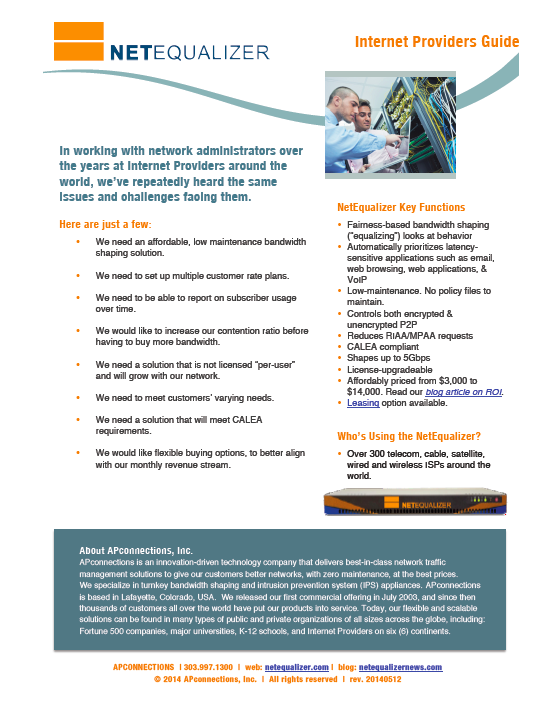
This month we have updated our Internet Providers Guide. If you are a telecommunications, satellite systems, cable, or wireless/wired Internet Services Provider (ISP), and are considering a NetEqualizer, you may want to review our updated Internet Providers Guide.isp_wp

This summary guide (2-3 pages) is focused on issues specific to Internet Providers, and explains how the NetEqualizer is used by our customers to address these common issues. This is a quick way to learn about how the NetEqualizer might apply to your environment.

If you are a current customer, these guides are a great read to optimize your NetEqualizer configuration. Take a look to see if there are features that you might not be using and want to take advantage of in your NetEqualizer installation. We would be happy to help you with your configuration.

If you are current on NetEqualizer Software and Support (NSS), contact:

support@apconnections.net

-or-

303-997-1300

to get help optimizing your NetEqualizer.


Spotlight: Our South American Reseller, Reinaldo Neilla

As many of our customers know, we sell directly to businesses in most geographies, particularly the U.S. and Canada. However, in some areas of the world, we work with reseller organizations. Many of these international resellers started as our customers, loved our product, and asked to get involved in building out the marketplace in their country.

We find that our international resellers are great at navigating customs requirements, communicating in local languages, and sharing their technical knowledge of the NetEqualizer.

This month we profile one of them, Telefonia Publica y Privada S.A. (TPP S.A.). TPP is an Argentinian WISP with over 30,000 broadband users in different cities in the interior of Argentina (growing at a rate of 450 per month). Reinaldo Neilla of TPP has been using a NetEqualizer for his business since July 2008.

According to Reinaldo, “the NetEqualizer helps us (TPP) to automatically and economically provide flow control for our customers. We converted from an Allot NetEnforcer and have never looked back.”

TPP represents NetEqualizer to customers in South America. If you are in South America, and would like to talk to or email Reinaldo, you can find his contact information on our web page, here:

NetEqualizer TPP Profile


Home Networking Tip

We often have networking tutorials in our blog – but not all of them are for enterprise networks. Recently, our Co-Founder, Steve Wagor, wrote a how-to on improving wireless dead spots in your home and setting up wireless home music. Check it out!


Best Of The Blog

Why Does Fear Sell over Value for IT?

By Art Reisman – CTO – APconnections

When Willie Sutton was asked, why do you rob Banks? He replied, “Because that is where the money is.”

Why do companies sell fear? Ask Willie Sutton. :)

From Y2K and ozone holes, to IP4 address space, sales channels love a good crises to drive a sale. The funny thing is, from my experience, the process of adjusting a product line to accommodate customer fear is evolutionary, akin to natural selection, and not a preplanned conspiracy. Demand seems to be created from some external uncontrolled upwelling, and not from a hard sell within the vendor ranks…

Photo Of The Month

IMG_0040

Common Yellowthroat Warbler
Common Yellowthroats are small songbirds that have olive backs, wings and tails, yellow throats and chests, and white bellies. Adult males have black face masks which stretch from the sides of the neck across the eyes and forehead, which are bordered above with white or gray. Females are similar in appearance, but have paler underparts and lack the black mask. These birds are on the move this time of year through Colorado.

An Easy Way to Get Rid of Wireless Dead Spots and Get Whole Home Music


By Steve Wagor, Co-Founder APconnections

Wireless dead spots are a common problem in homes and offices that expand beyond the range of single wireless access point. For example in my home office, my little Linksys Access point works great on my main floor , but down in my basement the signal just does not reach very well. The problem with a simple access point is if you need to expand your area you must mesh a new one, and off the shelf they do not know how to talk to each other.

For those of you have tried to expand your home network into a mesh with multiple access points there are howto’s out there for rigging them up

Many use wireless access points that are homemade, or the commercial style made for long range. With these solutions you will most likely need a rubber ducky antenna and either some old computers or at least small board computers with attached wireless cards. You will also need to know a bit of networking and setup most of these types of things via what some people would consider complex commands to link them all up into the mesh.

Well its a lot easier than that if you don’t need miles and miles of coverage using off the shelf Apple products. These are small devices with no external antennas.

First you need to install an Apple Extreme access point:
http://www.apple.com/airport-extreme
– at the time of this being written it is $199 and has been at that price for at least a couple of years now.

Now for every dead spot you just need the Apple Express:
http://www.apple.com/airport-express/
– at the time of this being written it is $99 and has been at that price for at least a couple of years now too.

So for every dead spot you have you can solve the problem for $99 after the Apple Extreme is installed. And Apple has very good install instructions on the product line so you don’t need to be a network professional to configure it. Most of it is simple point and click and all done via a GUI and without having to go to a command line ever.

For whole home music fairly effortlessly you can use the Analog/Optical Audio Jack on the back of the Airport Express and plug into your stereo or externally powered speakers. Now connect your iPhone or Mac product up to the same wireless network provided by your Airport Extreme and you can use Airplay to toggle on all or any of the stereos that your network has access to. So if you let your guests access your wireless network and they have an iPhone with Airplay then they could let you listen to anything they are playing by using Airplay to play it on your stereo for example while you are working out together in your home gym.

The Internet, Free to the Highest Bidder.


It looks like the FCC has  caved,

“The Federal Communications Commission said on Wednesday that it would propose new rules that allow companies like Disney, Google or Netflix to pay Internet service providers.”

WSJ article April 2014

Compare today’s statements to those made back in  January and February, when  the FCC was posturing  like a fluffed up Tom Turkey for Net Neutrality.

“I am committed to maintaining our networks as engines for economic growth, test beds for innovative services and products, and channels for all forms of speech protected by the First Amendment”

– Tom Wheeler FCC chairman Jan 2014

“The FCC could use that broad authority to punish Internet providers that engage in flagrant net-neutrality violations, Wheeler suggested. The agency can bring actions with the goal of promoting broadband deployment, protecting consumers, or ensuring competition, for example.”

-Tom Wheeler Jan 2014

As I eluded to back then, I did not give their white night rhetoric much credence.

“The only hope in this case is for the FCC to step in and take back the Internet. Give it back to the peasants. However, I suspect their initial statements are just grandstanding politics.  This is, after all, the same FCC that auctions off the airwaves to the highest bidder.”

– Art Reisman  Feb 2014

It seems to me the FCC is now a puppet agency of regulation. How can you  start by talking about regulating abuses threatening free access to the Internet, and then without blinking an eye, offer up a statement that Rich Guys can  now pay for privileged access to the Internet ?

I don’t know whether to cry or be cynical at this point. Perhaps I should just go down to my nearest public library , and pay somebody to stock their shelves with promotional NetEqualizer Material?

“The court said that because the Internet is not considered a utility under federal law, it was not subject to that sort of regulation.”

Quotes Referenced from New York Times article FCC in shift backs fast lanes for Web Traffic

NetEqualizer News: April 2014


April 2014

Greetings!

Enjoy another issue of NetEqualizer News! This month, we preview our summer release (8.1), ask for your help in selecting a technical seminar location, discuss our popular leasing program, and show off our brief guides for how we can help in the education space (both K-12 and Higher Education). As always, feel free to pass this along to others who might be interested in NetEqualizer News.

A message from Steve…
Steve Wagor, Co-Founder – APconnections

Colorado offers some great sights, and I prefer to see them riding a Harley. Riding here and trying to push the first day and last day of what we call the “riding season” further apart can be IMG_0069challenging. Last weekend’s ride started in the 40’s and then when it headed into the mountains, the temperature dropped into the 30’s. This required going through a small snow storm for 15 miles or so, and then rain the last 7 miles. But, you don’t ride a motorcycle unless you are willing to put up with a little of what Mother Nature can dump on you!


With the temperatures rising in Colorado (giving me more opportunities to ride), things are also heating up at APconnections. We have some exciting things planned for NetEqualizer this summer and beyond. Stay tuned to the newsletter in the coming months for more details.

We love it when we hear back from you – so if you have a story you would like to share with us of how we have helped you, let us know. Email me directly at stevew@apconnections.net. I would love to hear from you!

Our Summer Release (8.1) is Heating Up!

The response to Dynamic Real-Time Reporting (RTR) has been very positive, so we are spending resources this spring extending and enhancing its capabilities. We are excited to announce several key enhancements to RTR.

First, we are ready to support your need for long-term data storage. To do this, we are implementing an easy-to-use data export process. You will be able to export reporting history to your reports data warehouse.  This will enable you to slice and dice months or years worth of data on an external server.

Second, we are expanding our ability to track and graph bandwidth use for your IP addresses. In addition to being able to track and graph by IP and your entire network, as you can today in 7.5, we are adding tracking and graphing by subnet, Pools, and VLANs. This addition will give you even more visibility to your traffic, with the added context and meaning specific to your network environment. Behind the scenes, we are enhancing our storage architecture to enable us to quickly drill-up and down all levels of IP data.

totaltraffic

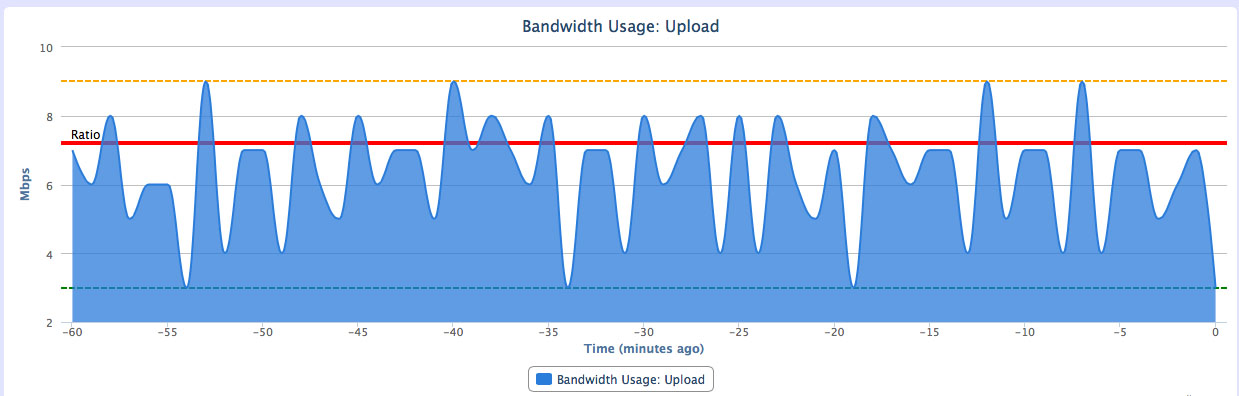
The way we track penalties will be enhanced as well. You’ll be able to see in graphical format how a particular IP has been penalized over time.

This is all in an effort to replicate the most heavily used features of ntop into our own tool with the goal of replacing ntop with RTR by 2015.

Once our 8.1 reaches G/A (we are anticipating July/August 2014), these features will be free to customers with valid NetEqualizer Software and Support who are running version 7.5. If you are not current with NSS, contact us today at:

sales@apconnections.net

-or-

303-997-1300


Wanted: Summer 2014 Technical Seminar Location

We are looking for a host for our next Technical Seminar!

Our popular technical seminar brings our CTO, Art Reisman, directly to you. Art will explore the NetEqualizer technology in detail and can answer all of your technical questions. Art is a futurist and successful entrepreneur, and can delve into diverse topics such as business ownership and technology direction, along with bandwidth shaping and caching.

This is also a great opportunity to meet other NetEqualizer customers in your area. This half-day session is held as a casual, user-group format. This is not a marketing presentation; it was created by techies, for techies!

You would be a great candidate to host the Summer Technical Seminar if…neteq seminar logo with border

  • You would like to spend half a day with Art Reisman, our CTO.
  • You have a NetEqualizer that Art can log into during the seminar to review your setup.
  • You have a room to fit up to 20 attendees.
  • You can help to coordinate logistics (room, directions, etc.).

Possible locations are not limited to the United States and anyone across the world willing to have this half day event should not hesitate to contact us:logo-270x231

sandy@apconnections.netWashington University in St Louis

-or-

303-997-1300 x104gordon_college

Previous locations for the technical seminar include:
Washington University – St. Louis
Western Michigan
Gordon College
and more!


Think You Cannot Afford a NetEqualizer? Consider a Lease!

Last summer, we announced our new NetEqualizer Leasing Program, and since then, we have seen a great adoption rate. This program works best for those customers who need to align monthly expenditures with a monthly revenue steam – models commonly used by Business Centers and Internet Service Providers (for example). If you are a business owner in either of these verticals (or any other industry that could benefit), you should check out our Leasing Program to see if it meets your needs!

Please note that the NetEqualizer Leasing Program is currently only available to customers in the United States and Canada.

If you have questions about this program, contact us at:

sales@apconnections.net

-or-

303-997-1300


NetEqualizer in a Nutshell: Summary Guides for Educationunnamed

If you are a K-12 School, College, or University considering a NetEqualizer, you may want to review our updated guides:

K-12 Schools Guide
-or-
College & University Guide

These summary guides (3-4 pages) are focused on issues specific to schools and colleges, and explain how the NetEqualizer is used by our customers to address these common issues. This is a quick way to learn about how the NetEqualizer might apply to your environment.

If you are a current customer, these guides are a great read to optimize your NetEqualizer configuration. Take a look to see if there are features that you might not be using and want to take advantage of in your NetEqualizer installation. We would be happy to help you with your configuration. If you are current on NSS, contact:

support@apconnections.net

to get help optimizing your NetEqualizer.


Best Of The Blog

An Entrepreneur’s Guide to the Headwinds of Change

By Art Reisman – CTO – APconnections

For anybody who has ever done something innovative, you’ll find most technology advances require some sort of change in behavior on the part of the target customer (consumer or business). The larger the organization, the less likely they are to embrace that change, and many times they are downright hostile toward change.

I attended an entrepreneur group last month where a company is going to market with a smart Window that changes reflectivity with outside temperature. The demand and value for this product clearly distinguish it as cost-savings winner, and yet, because of entrenched ideas about smart windows, it has been a 12-year battle of sacrifice and pain for founder Wil McCarthy to get his product to market…

Photo Of The Month

IMG_1022

Cal Poly – San Luis Obispo
Nestled in the hills behind Cal Poly – San Luis Obispo, is a sculpture garden to rival any modern art museum in the world. It actually appears to be more of a sculpture graveyard, filled with architecture student projects erected over the years that have been abandoned. Nevertheless, it’s a mysterious location worth visiting if you are ever in the area.

An Entrepreneurs Guide to The Headwinds of Change


By Art Reisman

For anybody who has ever done something innovative you’ll find most technology advances require some sort of change in behavior on the part of the target customer  (consumer or business).  The larger the organization,  the less likely they are to embrace that change, many times they are downright hostile toward change.

I attended an entrepreneur group last month where a company is going to market with a smart Window that changes reflectivity with outside temperature. The demand and value for this product clearly distinguish it as cost-savings winner, and yet, because entrenched ideas about smart windows, it has been a 12 year battle of sacrifice and pain for founder Wil McCarthy to get his product to market.

Like eating an unknown berry when you have other food sources, the human resistance reflex is perhaps deep-seated and evolutionary.  On the other hand, people will react to perceived threats almost immediately, a topic I wrote about previously.

Here are some of the governing factors that limit the ability of  a new product to change or enhance a market space.

1) Cash. Most businesses have already spent their spare cash before they have accumulated it.  They don’t keep a kitty around for a new  idea. Typically they  have a long list of existing ideas politically competing for a limited amount of investment.

  • The sports bar could use new big screen TV’s
  • The factory needs new automated robots
  • The office building could save money with new thermal windows

Barring some rare financial good times, like the stock bubble of 2000, all new products must face the reality of “cash flow politics”.

The list of productivity enhancements for any business is endless, so when an entrepreneur comes along with a newfangled idea to help a business, the newcomer must compete with cash needs within the organization. The new product/idea must be either superior to the existing list, or you must politically work your way to the top of the list.   Barring some rare financial good times, like the stock bubble of 2000, all new products must face the reality of “cash flow politics”.

2) Credibility

Perhaps this line item should have come before cash, but realistically none of these are optional.

I am normally not a big supporter of using your friends and relatives as market validators, (they will never give you honest feedback if your idea has a flaw) but you’ll need some friendly reviews of some kind to vouch for your product as a reference. So get a few people to try your product or service and write a review. Don’t be bashful about aggressively pursuing your references to say something. There are no rules here other than the references must be verifiable – as long as you know your product works and are willing to stand behind it.  Don’t worry about how prestigious your reviewers are – just get someone to agree, get a quote or two, and then set up a professional looking web page with the contact information for your references.

Note: When you set up a Web Page, you’ll likely use a template. Make sure to fill out every aspect of the template, there is nothing worse than going to a business web site and finding templates that have not been filled out with thoughtful content.

3) Market Research, will they buy?

This does tie back to the Cash question.

Most young, first-time entrepreneurs assume that since they like their idea, and all their friends like the idea, then people will buy their product or service.

The best thing you can do to get real honest feedback is to sell your product early based on a description. Call it a pre-order, or a promise to purchase. Figure out some way to find out if a real customer is willing to pay any amount for your product, before you spend 1000’s of hours building your product.

The level of commitment could be something as simple as a registration form for a discount on your website. If somebody takes the time to fill out a form on your web site, they are likely to buy later… I don’t have the cycles to explain all the ways to do this type of validation, but I can tell you the narrow audience of talking to your friends and family about your product as your conclusive market research is very misleading.  Sure, they may buy it, but you need to engage a stranger and get them to commit to something. The registration for a discount is just one simple way to confirm a higher level of commitment of interest before you invest too heavily in the idea.

4) Best if your product returns something $.

People and business like things that make money for them. This scheme is exploited to the hilt with vertical marketing, (e.g. Amway  Corporation and such…).  I am no fan of vertical marketing, but my point was that you need to offer your customer a way to make money and then you’ll get their attention. A better example would be the ATM business, banks pay convenience stores to place their ATMs in their stores. Another example is pay-per-view TV in hotels. Lodgenet grew to a multi-billion dollar company by offering small hotels a share of the revenue for their pay-per-view. What do you think works better when approaching a hotel operator? 1) selling pool cleaning supplies, or 2) a pay-per-view movie system that creates revenue to their bottom line.

Although these types of revenue generating ideas may require a change in your entrepreneurial thought process, they will greatly increase your chances of financial success.

Why Does Fear Sell over Value for IT?


When Willie Sutton was asked, why do you rob Banks ? He replied, “Because that is where the money is.”

Why do companies sell fear? Ask Willie Sutton. :)

From Y2K and ozone holes, to IP4 address space, sales channels love a good crises to drive a sale. The funny thing is, from my experience, the process  of adjusting a product line to accommodate customer fear is evolutionary, akin to natural selection, and not a pre-planned conspiracy. Demand seems to be created from some external uncontrolled upwelling, and not from a hard sell within the vendor ranks.

For example, back in 2008, we had a little mini boom selling our product to meet the demand based on the CALEA laws – we ended up supporting this feature because our customers demanded it. The demand (fear) for CALEA came out of left field, not once did we push this solution and yet everybody wanted it. I had a similar experience back in 2000 with Y2k. The product managers for the systems I worked on at AT&T were beating down my door to come up with any type Y2k inoculation update I could muster.  I can assure you that, with all due respect, the product managers at AT&T were not savvy enough to generate this demand, it came from the customers and the media.

Why fear trumps value.

They say the stock market is driven by fear and greed. CNN actually has a fear greed meter. With IT technology sales, fear and cost are the driving factors.

Normally businesses are cost conscious with their IT decisions, after all, IT purchases do not normally generate revenue and the idea is to spend as little as possible.  It makes sense that a business  would carefully analyze these expenditure(s).

Fear, real or imagined, on the other hand, can force a CIO into immediate decision making, and less scrutiny on cost.

What Fears are currently driving the market ?

Security

Security is always in the conversation.  The market in this area is fairly mature and about 90 percent of what is purchased is for CYA or regulatory reasons.

Falling Behind

This is more like keeping up with the Jones’s, if your competitor has large flat screen monitors in their control center, you want them;  however their actual effect on the bottom line may not clear but you buy anyway so as not to be appear obsolete.

Education

I seriously doubt that investment in classroom technology, for things like  “one for one” iPad’s per student, for the sake of a teaching aid, is really making anybody smarter, but the perception is that you must have it.

What’s on the horizon ?

I’ll cover this next week.

NetEqualizer News: March 2014


March 2014

Greetings!

Enjoy another issue of NetEqualizer News! This month, we discuss our summer release and 8.0 Beta progress, as well as announce our FlyAway Contest winner and revisit a classic NetEqualizer whitepaper. As always, feel free to pass this along to others who might be interested in NetEqualizer News.

A message from Art…
Art Reisman, CTO – APconnections

This past month I have had the pleasure of working with some of you installing our 8.0 Beta – Protocol art_canoe_pictureTracking – release on your NetEqualizers. It has been fun seeing protocol tracking in action, and I have been humbled by the positive feedback. Thanks to all of you for working with me on this project. I truly appreciate your willingness to be Beta host sites – thank you!

Speaking of the Beta, you can read more about our plan for protocol tracking below, along with our planned summer release! I am just getting used to the fact that it is almost spring, and here comes summer…

We love it when we hear back from you – so if you have a story you would like to share with us of how we have helped you, let us know. Email me directly at art@apconnections.net. I would love to hear from you!

2014 Real-Time Reporting (RTR) Summer Release

Many of you have noticed and thanked us for our investment over the last year in reporting within the NetEqualizer toolset. In 2014, we have made it a goal to completely replace ntop reports within NetEqualizer with Dynamic RTR.

To do this, we have several key features that we are working on for a summer release:

1) Increase our traffic graphs time frame to display up to 1 week of data.
2) Change the time displayed to show time of day.
3) Enable you to automatically dump data to a separate server for longer periods of analysis.

In addition to these key features, we plan to beef up our Pools reporting, by adding Pool and VLAN traffic graphs. This will enable you to see the upload and download usage over time for your defined Pools and VLANs. We will also graph penalties over time (for a selected IP, Pool, or the network as a whole), so that you can see how often your network traffic is being equalized.

totaltraffic

We plan to convert all remaining “Current Activity” reports into RTR reports, including the NetEqualizer Log. Now you will be able to sort, search, and view the log in a much more usable manner.

Finally, our protocol tracking reports will officially be generally available (G/A) in our summer release. You can read more about this in the article below.

RTR_Protocol_Tracking_One_IP_Pie2

While ntop will remain on the GUI interface through 2014, we expect to remove it in early 2015. So if you have not already starting using RTR, please put it on your list to look at in 2014 or ask us for a demo.

Once our summer release reaches G/A, these features will be free to customers with valid NetEqualizer Software and Support who are running version 7.5. If you are not current with NSS, contact us today at:

sales@apconnections.net

-or-

303-997-1300


Protocol Tracking: Update on 8.0 Beta

In our February Newsletter, we announced our Beta Release of Protocol Tracking reports.

Since then, we have installed the 8.0 Beta at multiple customer sites, and have received positive feedback. We now consider 8.0 to be stable, and it is working well. However, as we do not want to cause “release exhaustion”, we have decided to roll the protocol tracking into our summer release for our official G/A.

We know that it takes some time out of your schedule each time we offer a release, and we are deferring this to minimize disruption for our customers.

However, if you cannot wait until summer for protocol tracking, we are happy to offer the 8.0 code to anyone current on NSS running version 7.5+. Just email or call support to request 8.0.

sales@apconnections.net

-or-

303-997-1300


Comparison Paper: A Classic Revisited

If it has been some time since you have read our classic white paper, Equalizing Compared to Application Shaping, you are in for a treat!

We have just updated and revised it, to make it more readable and relevant to today’s networks.

This is a must read if you ever get asked, “What makes the NetEqualizer different and better than other devices?” Or, you can pass it along to your boss, colleagues, and others that might want to learn more about behavior-based shaping technology.

Take a look at the new whitepaper here.

And, if you have questions, feel free to contact us at:

sales@apconnections.net

-or-

303-997-1300


And the FlyAway Contest Winner Is…

Every few months, we have a drawing to give away two round-trip domestic airline tickets from Frontier Airlines to one lucky person who’s recently tried out our online NetEqualizer demo.40

The time has come to announce this round’s winner.

And the winner is…

Scott Coughlin at ValueOptions!

Congratulations, Scott!

Please contact us within 30 days (by April 18, 2014) at:

admin@apconnections.net

-or-

303-997-1300

to claim your prize!


Best Of The Blog

Federal Judge Orders Internet Name be Changed to CDSFBB (Content Delivery Service For Big Business)

By Art Reisman – CTO – APconnections

Okay, so I fabricated that headline, it’s not true, but I hope it goes viral and sends a message that our public Internet is being threatened by business interests and activist judges.

I’ll concede our government does serve us well in some cases;  they have produced some things that could not be done without their oversight, for example:

1) The highway system

2) The FAA does a pretty good job keeping us safe

3) The Internet. At least up until some derelict court ruling that will allow ISPs to give preferential treatment to content providers for a payment (bribe), whatever you want to call it.

The ramifications of this ruling may bring an end to the Internet as we know it…

Photo Of The Month

Tom’s Thumb
Because we live near the Rocky Mountains in Colorado, hiking is in our blood. Given our natural interest in the activity, it’s also fun to hike in other parts of the country and the world. This picture was taken at the summit of Tom’s Thumb in the McDowell Sonoran Preserve near Phoenix, Arizona. Though not nearly as high as Colorado peaks, the trail was arduous and offered a great view at the top.

Stuck on Desert Island, Do You Take Your Caching Server or Your Netequalizer ?


Caching is a great idea and works well, but I’ll take my NetEqualizer with me if forced to choose between the two on my remote island with a satellite link.

Yes there are  a few circumstances where a caching server might have a nice impact. Our most successful deployments are in educational environments where the same video is watched repeatedly as an assignment;  but for most wide open installations  ,expectations of performance far outweigh reality.   Lets  have at look at what works and also drill down on expectations that are based on marginal assumptions.

From my personal archive of experience here are some of the expectations attributed to caching that perhaps are a bit too optimistic.

“Most of my users go to their Yahoo or Face Book home page every day when they log in and that is the bulk of all they do”

– I doubt this customer’s user base is that conformist :),   and they’ll find out once they install their caching solution.  But even if true, only some of the content on Face  Book and Yahoo is static.  A good portion of these pages are by default dynamic, and ever-changing with content.  They are marked as Dynamic in their URLs which means the bulk of the page must be reloaded each time.  For example,  in order for caching to have an impact , the users in this scenario would have to stick to their home pages , and not look at friend photo’s or other pages.

” We expect to see a 30 percent hit rate when we deploy our cache.”

You won’t see a 30 percent hit rate, unless somebody designs some specific robot army to test your cache, hitting the same pages over and over again. Perhaps, on IOS update day, you might see a bulk of your hits going to the same large file and have a significant performance boost for a day. But overall you will be  doing well if  you get a 3 or 4 percent hit rate.

” I expect the cache hits to take pressure off my Internet Link”

Assuming you want your average user to experience a fast loading Internet, this is where you really want your NetEqualizer ( or similar intelligent bandwidth controller) over your caching engine. The smart bandwidth controller can re-arrange traffic on the fly insuring Interactive hits get the best response. A caching engine does not have that intelligence.

Let’s suppose you have a 100 megabit link to the Internet ,and you install a cache engine that effectively gets a 6 percent hit rate. That would be exceptional  hit rate.

So what is the  end user experience with a 6 percent hit rate compared to pre-cache ?

-First off, it is not the hit rate that matters when looking at total bandwidth. Much of those hits will likely be smallish image  files from the Yahoo home page or common sites, that account for less than 1 percent of your actual traffic.  Most of your traffic is likely dominated by large file downloads and only a portion of those may be coming from cache.

– A 6 percent hit rate means that 94 percent miss rate , and if your Internet was slow from congestion before the caching server it will still be slow 94 percent of the time.

– Putting in a caching server  would be like upgrading your bandwidth from 100 megabits to 104 megabits to relieve congestion. That cache hits may add to the total throughput in your reports, but the 100 megabit bottleneck is still there, and to the end user, there is little or no difference in user perception at this point.  A  portion of your Internet access is still marginal or unusable during peak times, and other than the occasional web page or video loading nice and snappy , users are getting duds most of the time.

Even the largest caching server is insignificant in how much data it can store.

– The Internet is Vast and your Cache is not. Think of a tiny Ant standing on top of Mount Everest. YouTube puts up 100 hours of new content every minute of every day. A small commercial caching server can store about 1/1000 of what YouTube uploads in day, not to mention yesterday and the day before and last year. It’s just not going to be in your cache.

So why is a NetEqualizer bandwidth controller so much more superior than a caching server when changing user perception of speed?  Because the NetEqualizer is designed to keep Internet access from crashing , and this is accomplished by reducing the large file transfers and video download footprints during peak times. Yes these videos  and downloads may be slow or sporadic, but they weren’t going to work anyway, so why let them crush the interactive traffic ? In the end caching and equalizing are not perfect, but from real world trials the equalizer changes the user experience from slow to fast for all Interactive transactions, caching is hit or miss ( pun intended).

Federal Judge Orders Internet Name be Changed to CDSFBB (Content Delivery Service for Big Business)


By Art Reisman – CTO – APconnections

Okay, so I fabricated that headline, it’s not true, but I hope it goes viral and sends a message that our public Internet is being threatened by business interests and activist judges.

I’ll concede our government does serve us well in some cases;  they have produced some things that could not be done without their oversight, for example:

1) The highway system

2) The FAA does a pretty good job keeping us safe

3) The Internet. At least up until some derelict court ruling that will allow ISPs to give preferential treatment to content providers for a payment (bribe), whatever you want to call it.

The ramifications of this ruling may bring an end to the Internet as we know it. Perhaps the ball was put in motion when the Internet was privatized back in 1994. In any case, if this ruling stands up,  you can forget about the Internet as the great equalizer. A place where a small businesses can have a big web site. The Internet where a new idea on a small budget can blossom into a fortune 500 company. A place where the little guy can compete on equal footing without an entry fee to get noticed. No, the tide won’t turn right away, but at some point through a series of rationalizations, content companies and ISPs, with deep pockets, will kill anything that moves.

This ruling establishes a legal precedent. Legal precedents with suspect DNA are like cancers, they mutate into ugly variations, and replicate rapidly. There is no drug that can stop them. Obviously, the forces at work here are not the court systems themselves, but businesses with motives. The poor carriers just can’t seem to find any other solution to their congestion other than charge for access? Combine this with oblivious consumers that just want content on their devices, and you have a dangerous mixture. Ironically, these consumers already subsidize ISPs with a huge chunk of their disposable income. The hoodwink is on. Just as the public airwaves are controlled by a few large media conglomerates, so will go the Internet.

The only hope in this case is for the FCC to step in and take back the Internet. Give it back to the peasants. However, I suspect their initial statements are just grandstanding politics.  This is, after all, the same FCC that auctions off the airwaves to the highest bidder.

NetEqualizer News: February 2014


February 2014

Greetings!

Enjoy another issue of NetEqualizer News! This month, we preview our new Software Update 8.0 Beta (which includes Protocol Tracking reports), as well as our new Mogicho licensed movie content service for customers with our caching option, and lastly we remind you about our NetEqualizer trade-in policy. As always, feel free to pass this along to others who might be interested in NetEqualizer News.

A message from Art…
Art Reisman, CTO – APconnections

As we move into February, we have been glued to the TV watching the Olympic games – well, actually glued to “on demand” video replays on our iPads and laptops. We love that there are no commercials and that we can watch whenever we want! If you find yourself doing the same, you will not be surprised that more and more customers mention that video is a huge percentage of their Internet traffic.
art_canoe_picture
We recognize this trend, and are working on this in several areas. This month we talk about our new Protocol Tracking reports, which will help you to make sense of all the video on your network. Also, as I mentioned last month, I am working on partnerships with the movie industry. We call this offering “Mogicho”, and you can read more about it below. 2014 begins, we are excited to see what the year brings. In the United States, the economy is finally improving, at least when measured by job creation, stock market growth, and real estate sales. Hopefully, this trend continues, as we are ready for the Great Recession to be officially over! We hope that you are seeing an improving economy in your part of the world too.

We love it when we hear back from you – so if you have a story you would like to share with us of how we have helped you, let us know. Email me directly at art@apconnections.net. I would love to hear from you!

Software Update 8.0 Beta: Protocol Tracking Reports

We are excited to announce the 8.0 Beta Release for NetEqualizer where we introduce Protocol Tracking reports!

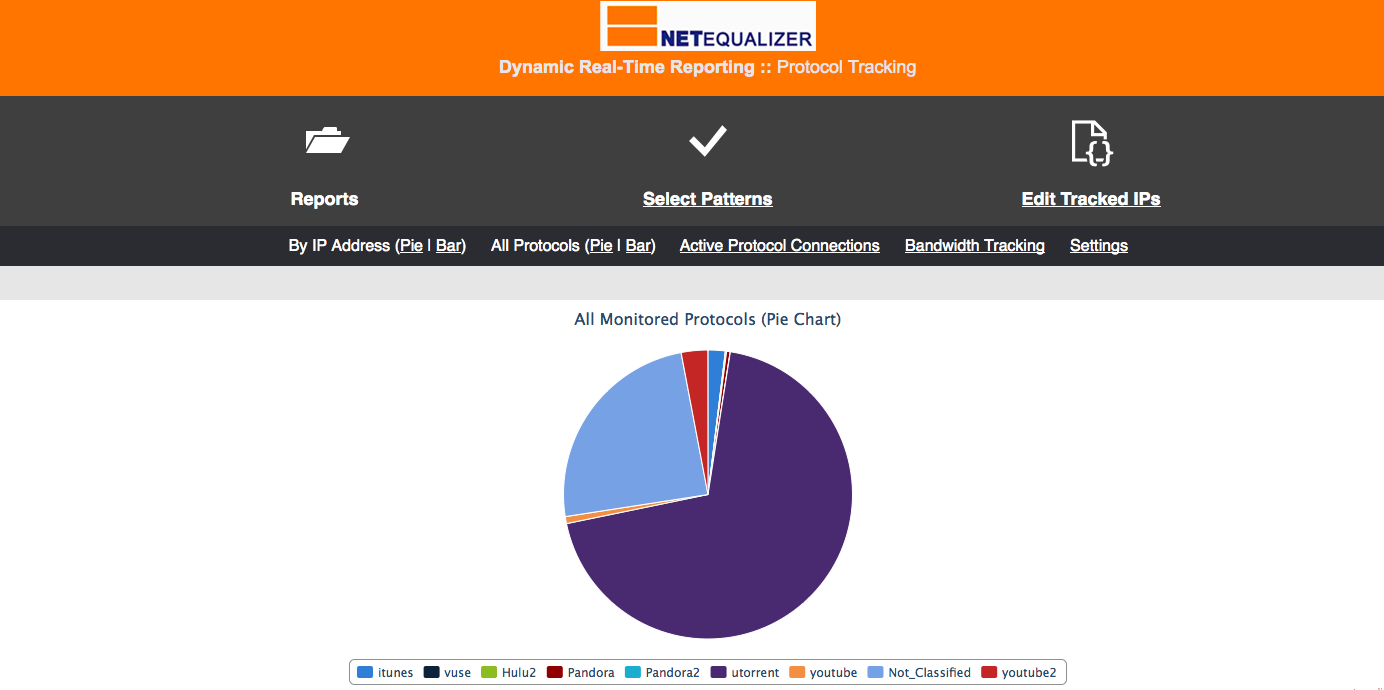
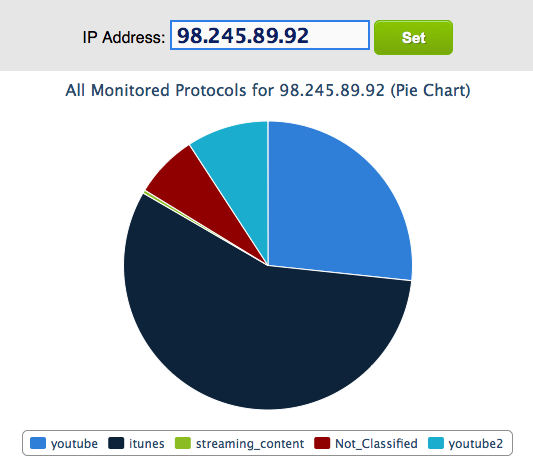
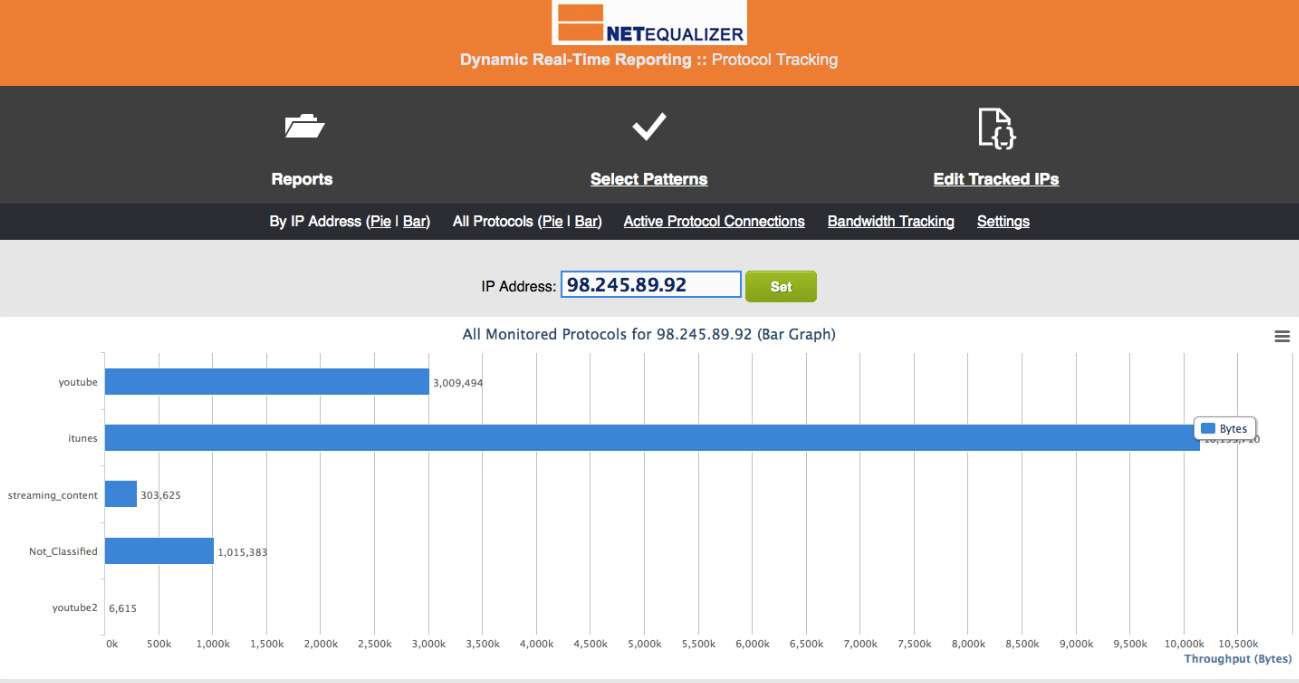
Protocol Tracking reports extend our Dynamic Real-Time Reporting (RTR) – Traffic Reporting capabilities. Through Protocol Tracking, we enable you track various Internet protocols (Hulu, YouTube, Netflix, iTunes, Pandora, etc.) and then view these protocols and bandwidth usage for an IP or your entire network in a pie or bar chart format.

s1

We built our RTR tool last year, and based on the feedback that we received, we have continued our investment in visibility and reporting in 2014. As many of you note that you need to better understand how much video is on your network, and what types of traffic are consuming your bandwidth, we felt that the time was right for Protocol Tracking reports.

RTR_Protocol_Tracking_One_IP_Pie2

When we introduced our NetGladiator IPS in mid-2012, we built it out with a powerful Layer 7 engine. We have now incorporated this engine into our NetEqualizer code base, so that we can offer you a way to report on protocols on your network. We see this as a complementary component that enhances our NetEqualizer shaping features, and we are excited to offer you this additional visibility into your network traffic.

How to Participate in the 8.0 Beta

The 8.0 Beta is subject to availability. If you are interested in the Beta, and meet the following requirements, please contact us to see if this is a good fit for your situation.

Beta requirements:

– must be current on NSS

– must be running NE3000 or NE4000

– must be on Software Update 7.5

– must be available to provide feedback on the 8.0 Beta features

Once 8.0 reaches GA, these features will be free to customers with valid NetEqualizer Software and Support who are running version 7.5. If you are not current with NSS, contact us today at:

sales@apconnections.net

-or-

303-997-1300


Trade In Your Old NetEqualizer!

Many of you may not be aware that we offer a generous trade-in credit when it is time to retire your old NetEqualizer. We will give you 50%* of the original unit price plus 50% of any license upgrades towards a new unit.

We believe that this offer is unmatched in the industry. Why do we do this? Because we believe that bandwidth shaping should be affordable, and as part of that, we help you to protect your original investment.

How to know if you need a new NetEQ?

1) You can no longer run our current software. NE2000’s earlier than August 2011 cannot run 7.0+.

2) Your hardware warranty has long expired and your unit is over five years old. We offer four years of hardware warranty (NHW), which must be purchased each consecutive year from your original purchase. If you are outside of warranty, your unit is probably past its useful life.

3) You want the faster processors and more memory that new hardware can give you. Just like a PC or tablet, the hardware that we offer today is faster and has more memory than older boxes.

4) And the most important reason, because you want one!

And remember, while we will continue to offer license upgrades on our NE2000 series as needed, if you have a NE2000 purchased before August 2011, it will only be supported through 12/31/2014. If you have an older NE2000, please contact us sometime in 2014 to discuss your options.

If you have questions on trade-in units, feel free to contact us at:

sales@apconnections.net

-or-

303-997-1300

* This offer does not apply to POE or Lite units.


Coming Soon: Mogicho
A new movie offering that leverages our NetEqualizer Caching Option (NCO) infrastructure

In addition to our other projects, we are also progressing with our “Mogicho” offer to bring an amazing assortment of licensed movie content into our NCO caching server. We will be finalizing the license with the content providers next month, and we are excited to say it will be a nice value-add to any ISP needing to enhance their offer to their constituents. We think Mogicho will be especially of interest to ISPs with less than a 5Gbps Netflix streams2 (where Netflix currently is not interested in providing Netflix Open Connect (caching engine)).

Where will this be available?

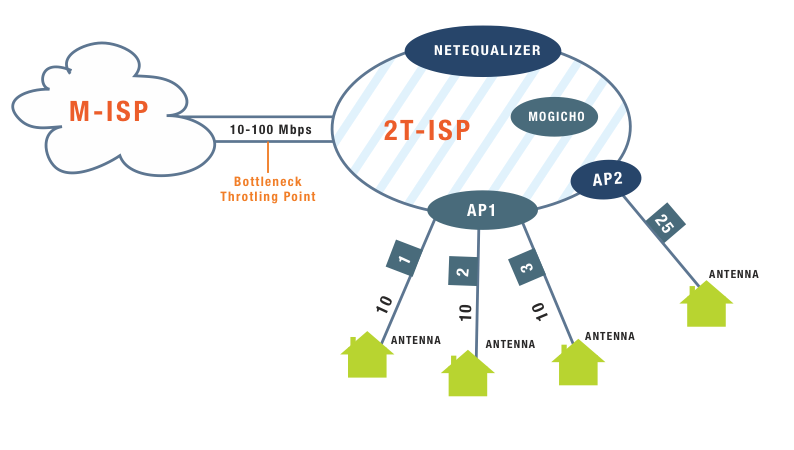
Mogicho is a new distribution channel for unique online movie content, targeted at rural and remote users not served by Major Internet Providers (M-ISPs).

We are initially releasing Mogicho within the United States and Canada. There are millions of consumers in the United States and Canada who are served by second-tier Internet providers. These second-tier providers (2T-ISPs) include small town cable operators, small town phone companies, and independent rural WISPs.

How does Mogicho work?

Mogicho movie content is secured & stored locally on the NetEqualizer at the 2T-ISP NOC. Video is streamed through the 2T-ISP Access Points directly to customers. Video is available at higher speeds than today, as each customer is not competing with all customers for video to come through the M-ISP throttling point.

s3Looking for more announcements this spring on Mogicho, and if you have questions, contact us at:

sales@apconnections.net

-or-

303-997-1300


Best Of The Blog

Guest Article From a WISP Owner in the Trenches

By Rory Conaway – Triad Wireless

Editors Note: A great read if you are thinking of starting a WISP and need a little inspiration. Re-posted with permission from Rory Conaway, Triad Wireless. Rory is president and CEO of Triad Wireless, an engineering and design firm in Phoenix. Triad Wireless specializes in unique RF data and network designs for municipalities, public safety and educational campuses. E-mail comments to rory@triadwireless.net.
Tales from the Towers – Chapter 50: CRY ‘HAVOC!’, AND LET SLIP THE DOGS OF WAR

Interesting fellow that Shakespeare because not only did he write plays, he also acted in them. And although Tales from the Towers doesn’t hold a candle (pre-electric times, you can groan now) to Mr. William’s contributions to culture, I have a double life too. If you haven’t guessed it yet, writing articles really isn’t my full-time job (my wife is giving me the look that says I should find another hobby), I actually run a WISP, do installs, and handle tech support calls. After 10 years though, and many mistakes and successes, I’ve decided to rethink my network from the ground up as if I was starting tomorrow and share that.

The idea is to help lay out a simplified road map that will bring forth thousands of new WISPs into the market that can start breaking down the digital divide without taxpayer money and creating a new business. Since a thousand bee stings can take out the biggest animal, the more companies that jump into the industry, the better the chances of competing against the incumbents. It’s time to open the floodgates of small business entrepreneurs and begin the war for last mile bandwidth delivery everywhere. And although few outside Star Trek fans will recognize one of Shakespeare’s most famous sayings, they will recognize this modern variation, “Who let the dogs out”! Hopefully it’s the WISP industry…

Photo Of The Month

IMG_0948

Storm Chasing Convention
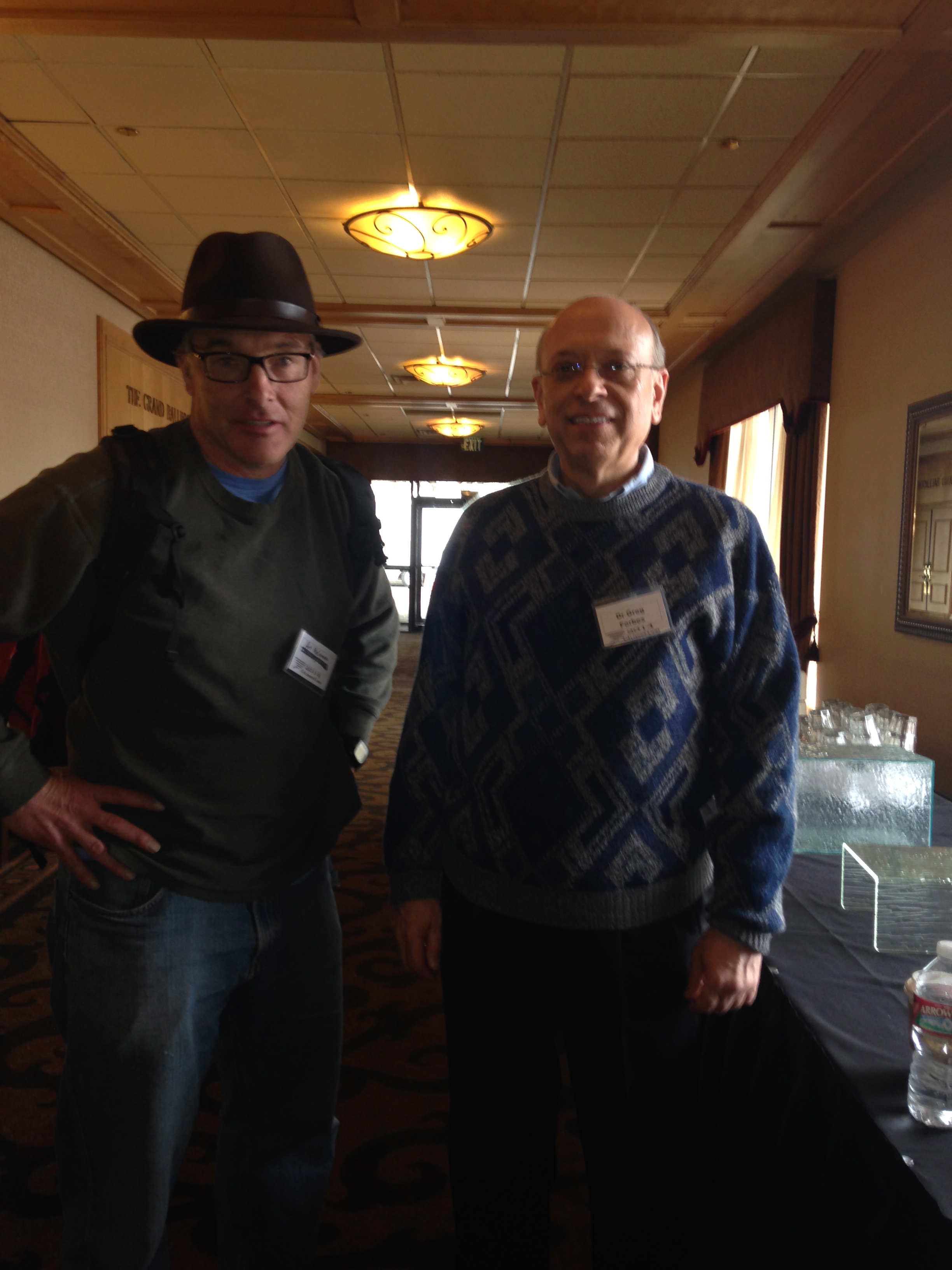
Given the fact that the winter weather has been so severe this year, Art decided to check in with Greg Forbes (The Weather Channel severe weather expert) at a local storm chaser convention. Here he is with him last weekend. Unfortunately, after talking with him, he can’t make any promises about good weather in the spring.