Network Access Control lease plan now available from APconnections


APconnections to Offer Managed Network Access Control with no upfront costs.

LAFAYETTE, Colo., January 6, 2009 — APconnections, a leading supplier
of plug-and-play bandwidth shaping products and the creator of the
NetEqualizer, today announced it would begin offering a network access
control management services with no upfront  costs.

The services will be targeted toward networks that typically see a
high degree of turnover among users, such as airports, hotels, and
Internet cafes. For qualifying customers, APconnections will remotely
manage access to Internet connections, leaving clients free from the
worry of regulating and distributing short-term Internet service.

The suggested initial management package will offer users the option
of utilizing a complimentary 128 kbs connection or upgrading to a
high-speed 1-megabit connection for a fee. Upon accessing the network,
users will be directed to a billing page, which will offer the two
levels of service. The content of this page will largely be determined
by the client, including the option to display advertisements from
local vendors, providing the opportunity to further increase revenues.

In addition to clients no longer having to worry about regulating
Internet access, APconnections will also be responsible for all
billing and technical support. On a monthly basis, clients will be
provided with a statement showing income and network usage.

The only cost to clients will be a pre-determined percentage of the
income from customers’ high-speed upgrades. While this service can be
provided for customers with an existing ISP, Internet service can also
be established or expanded through APconnections directly for an
additional fee.

To qualify, clients must average a set number of monthly users. A
one-month trial of the service will be offered at no charge, at the
conclusion of which a service contract must be signed.

For more information, please contact APconnections at 1-888-287-2492
or via e-mail at admin@APconnections.net.

APconnections is a privately held company founded in 2003 and is based
in Lafayette, Colorado.

Art Reisman
www.apconnections.net
www.netequalizer.com
303-997-1300 extension 103
720-560-3568 cell
APconnections Announces NetEqualizer Holiday Promotion


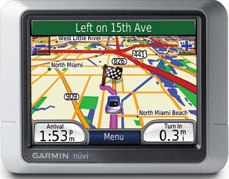
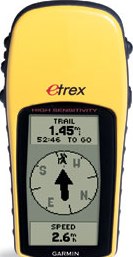
APconnections announced today that all NetEqualizer’s purchased between December 10, 2008 and January 1, 2009 will automatically entitle the purchaser to a free Garmin GPS system.

Details:

Qualifying purchasers of NetEqualizer models NE2000-20 and above will receive a Garmin nüvi® 200 (part number: 010-00621-10):

garming-nuvi-2001

Purchases of NetEqualizer models NE2000-10, NE2000-4, NE2000-2, or any NSS qualify for a free Garmin eTrex® H (part number: 010-00631-00):

etrex-h

To qualify, send us the serial number and purchase date from your NetEqualizer. Requests for Garmin  units must be received by Jan 31, 2009. Only NetEqualizer models and NSS upgrades purchased between December 10, 2008 and January 1, 2009 will qualify. Offer good while supplies last. Standard mapping software included as provided by Garmin. All other accessories and mapping software not included.

NetEqualizer Network Access Control Module Helps Generate Revenue


Background: The NetEqualizer network access control module (NAC), which was released this past September, allows users to re-direct “unknown” or “unauthorized” traffic to a web server hosted on the NetEqualizer.  Once redirected, you can have the NetEqualizer perform a variety of actions, including:

1) Authenticating a user via login
2) Allowing the unknown user to create a paid account (using a credit card, for example)
3) Allowing the user to pass through to the Internet without logging in

Did you know that the NetEqualizer network access control module offers several options to generate revenue? One of the dilemmas many of our customers have mentioned is that in order to be competitive they don’t want to charge for their Internet service (hotels, etc.). Well, the cool thing about the NAC module is that you can offer multiple logins with different rate limits. For example, one could be your standard free service and another could be a paid service with higher bandwidth rates.

An additional revenue generating feature of the NAC module is the ability to run advertisements on the login screens. For example, if you’re a hotel operator, even if you’re not charging for Internet service, you could have your guests login on a screen with the logo and name of a local merchant, or anybody that is interested in cross marketing with your hotel.

The NAC module also has customizable splash screens on its default login page that you can edit, thus welcoming your users with whatever content you choose.

For more information about the NetEqualizer network access control module, visit our Web page at www.netequalizer.com or contact us at 1-888-287-2492 or via email at sales@netequalizer.com.

NetEqualizer Passes Load Testing with High Marks


Editor’s Note: We just wanted to comment on this recent press release. This is not just industry hype as we really do test our units. To give you an example, several years ago we had a few units locking up in the field (perhaps one out of hundred) after many hours of continuous use. This type of problem is hard to re-create in a lab, but, unless you can recreate it, there’s very little chance of finding and correcting the issue. However, with the help of Candela Technologies and their LanForge equipment, we were able to recreate the problem quite easily. It was just a matter of accelerating time by increasing loads on the NetEqualizer well beyond what was likely in the real world.

Since that first experience with a load-related latent bug, we have always gone back to Candela for validation testing under load and are happy to say we have caught all service-related bugs with new versions prior to release.

With that said, here is the latest press release:


One-Gigabit NetEqualizer Performs Flawlessly Under Independent Load Testing

USA, FERNDALE, Washington (December 03, 2008) – APconnections – a leading supplier of plug-and-play bandwidth shaping products – today announced test results from the independent laboratory of Candela Technologies.

“APconnections has been coming to us for years to put extreme realistic loads on their equipment,” said Ben Greear, lead engineer, Candela Technologies. “We used our LANforge traffic generator to hit the latest NetEqualizer release with over 1.2 million simulated user data streams within a 60 second window. The NetEqualizer shrugged off
the abuse and continued to pass in excess of 800Mbps of bi-directional traffic.  The NetEqualizer successfully ran this torture test for a full 24 hours without a hiccup.”

Eli Riles, vice president of technology at APconnections, was very pleased with the results, noting the importance of the tests to ensuring NetEqualizer’s high level of performance.

“With our higher-end shaping solutions, we cannot afford a problem in the field,” said Riles.

APconnections is extremely grateful to have such a knowledgeable company like Candela Technologies with such impressive simulation capabilities testing its equipment. Their load generator is able to strain equipment well beyond real world situations, ensuring its stability and protecting company and product reputations.

The NetEqualizer is a plug-and-play bandwidth control and WAN/Internet optimization appliance. It is both flexible and scalable. The NetEqualizer’s unique “behavior shaping” technology gives priority to latency-sensitive applications such as VoIP and email. It does it all automatically and so dynamically while improving on other bandwidth shaping technology available.

For more information regarding the New NetEqualizer one-gigabit  carrier class traffic shaping solution, please visit www.netequalizer.com.

APconnections is a privately held company founded in 2003 and based in Lafayette, Colorado.

Candela Technologies specializes in emulating network traffic including VoIP and VLANs.

Canadians Mull over Privacy and Deep Packet Inspection


Editor’s note: Seems the Canadians are also finally forced to face the issue of deep packet inspection. I guess the cat is out of the bag in Canada? One troubling note in the article below is the authors insinuation that the only way to control Internet bandwidth is through DPI .

Privacy Commissioner of Canada - blog.privcom.gc.ca

CRTC begins dialogue on traffic shaping

Posted on November 21st, 2008 by Daphne Guerrero

Yesterday, the CRTC rendered its decision on ISP’s traffic shaping practices. It announced that it was denying the Canadian Internet Service Providers’ (CAIP) request that Bell Canada, which provides wholesale ADSL services to smaller ISPs across the country, cease the traffic-shaping practices it has adopted for its wholesale customers.

“Based on the evidence before us, we found that the measures employed by Bell Canada to manage its network were not discriminatory. Bell Canada applied the same traffic-shaping practices to wholesale customers as it did to its own retail customers,” said Konrad von Finckenstein, Q.C., Chairman of the CRTC.

Moreover, the CRTC recognized that traffic-shaping “raises a number of questions” for both end-users and ISPs and has decided to hold a public hearing next July to consider them.

Read the full article

Deep packet Inspection a poison pill for NebuAd ?


Editors Note:

NebuAd had a great idea show ads to users based on content and share the revenue with ISPs that sign up for their service. What is wrong with this Idea ? I guess customers don’t like people looking at their private data using DPI hence the lawsuit detailed in the article below.  The funny thing is we are still hearing from customers that want DPI as part of their solution, this includes many Universities , ISPs and alike.  I think the message is clear: Don’t use Deep Packet Inspection unless you fully disclose this practice to your customers/employees or risk getting your head nailed to a table.

———————————————————————–

From Zdnet Nov 11, 2008

NebuAd, the controversial company that was trying to sell deep-packet inspection technology as a means of delivering more relevant ads, has already had most of the life sucked out of it. Now, a class action lawsuit filed in U.S. District Court in San Francisco today, could put the final nail in the coffin.

Full article

http://blogs.zdnet.com/BTL/?p=10774

One Gigabit NetEqualizer Announced Today


Editors Note: We expect to go higher than 1 gigabit and 12,000 users in the near future. This is just a start.

APconnections Announces Fully Equipped One-Gigabit NetEqualizer Traffic Shaper for $8500

LAFAYETTE, Colo., Nov. 7/PRNewswire/ — APconnections, a leading supplier of plug-and-play bandwidth shaping products, today announced a one-gigabit enhancement to their NetEqualizer brand traffic shapers. The initial release will handle 12,000 users and sustained line speeds of one gigabit.

“Prior to this release, our largest model, the NE-3000 was rated for 350 megabits,” said Eli Riles, APconnections vice president of sales. “Many of our current customers liked our technology, but just needed a higher end machine.The other good news is that our current NE-3000 platform will be able to run this new version with just a software upgrade, no forklift required.”

Future releases are in the works for even higher speeds and more users, thus solidifying APConnections as the price-performance leader in the WAN optimization market place.

In its initial release, the one-gigabit model will start at $8,500 USD. For more information, contact APconnections at 1-800-918-2763 or via email at sales@netequalizer.com.

The NetEqualizer is a plug-and-play bandwidth control and WAN/Internet optimization appliance that is flexible and scalable. When the network is congested, NetEqualizer’s unique “behavior shaping” technology
gives priority to latency-sensitive applications, such as VoIP and email. Behavior based shaping is the industry alternative to Deep Packet Inspection (DPI). It does it all dynamically and automatically, improving on other bandwidth shaping technology available.

APconnections is a privately held company founded in 2003 and is based in Lafayette, Colorado.

Contact: APconnections, 1-800-918-2763

Deep Packet Inspection DPI a Felony ?


Editors Note: In a recent press release APconnections denounced the use of any and all DPI in its products going forward. A customer brought this Article by Ryan Singel to our attention and it is worth reading if you are wondering where this is going.

Former Prosecutor: ISP Content Filtering Might be a ‘Five Year Felony’

By Ryan Singel EmailMay 22, 2008 | 3:23:35 PMCategories: Network Neutrality, Surveillance

Prison_san_quentin NEW HAVEN, Connecticut — Internet service providers that monitor their networks for copyright infringement or bandwidth hogs may be committing felonies by breaking federal wiretapping laws, a panel said Thursday.

University of Colorado law professor Paul Ohm, a former federal computer crimes prosecutor, argues that ISPs such as Comcast, AT&T and Charter Communications that are or are contemplating ways to throttle bandwidth, police for copyright violations and serve targeted ads by examining their customers’ internet packets are putting themselves in criminal and civil jeopardy.

See the full Article

http://blog.wired.com/27bstroke6/2008/05/isp-content-f-1.html

Other ranting

http://xplornetsucks.blogspot.com/2008/11/internet-packet-spoofing.html

The birth of a new kind of new kind of Packet Shaper (NetEqualizer)


Today my attention was drawn to a forum thread about setting up queuing and bandwidth fairness on a Cisco Router. The techs in the discussion were obviously very familiar with Cisco and its internal programming language. Needless to say it was a very low level discussion and  to make any sense of it would require  sort a Cisco certification on the inner workings of their IOS programming language. The discussion reminded me of a conversation I had back in 2002 when the idea of turn key bandwidth controller popped into my head

In 2002  I was running a start up WISP with a partner. One issue that we saw coming was sharing bandwidth on a tightly contested T1. We decided it was worth looking into what was available, was there something we could just plug in to handle this and get on with our core business of  running the WISP.
My day job at the time was at Bell Labs, and just recently there had been quite  a few defections to Cisco.  So I  decided to tap some of more former coworkers to see if Cisco had anything turn key picked up the phone and asked a couple of peers what a Cisco box could do  support of some form of turn key fairness. ‘Well you can program the IOS bios queues bla bla” I had heard enough. It seemed that although it was definitely possible to do this with Cisco, I just wanted  something to plug  in and forget about it.  I did not have money to hire a Cisco tech and figured many other start up WISPS in my position were in the same boat. Little did I realize at the time, that the NetEqualizer would become an International hit, distributed across all industries (Hospitals, Cable Companies, Universities etc) around the world over the next 6 years.

The model  of how to approach this issue of fairness was already widely used  in the computer server world. Most people are not concerned with  fairness of processes or threads on web server or data base server? Why is that ? Most  modern computer servers  have some form of operating system that insures that the processes running don’t dominate the central processor (usually Linux). The basic idea is that a little timer that keeps track of a processors resources and how much a process has used if they HOG too much this timer kicks and allows others to get their turn.

The point of this story is there is no manual intervention needed, computers are so cheap that it would be absurd to pay somebody to do this, but that was not always the case. As late as 1986 the Main Frame computer dominated data processing, and with a main frame came a computer operator , a human who had the task of making sure jobs (as there were called) ran to completion in a timely manner,  as well as making sure tape drives were loaded etc.

Do you see the parallel here ? As computers became cheaper it was not economical to employ somebody to watch over this resource, the job still existed  but it was automated and incorporated into the operating system.

Flash forward to 2002, what my Cisco  freinds were  proposing was a labor intensive solution to managing a resource (bandwidth). So the idea was to take this one aspect of managing a network and essentially fire the operator (or the Cisco programmer) And so it was born an automated fairness device for sharing bandwidth and we have no looked back since.

Resources on computers and ways to handle this type of thing were invented back in the 70’s and became wide spread with the death of the card reader.

Editors note: CIsco is a fine product and perhaps there is some easy way to perform this function and I am just too stupid to understand.

Delusions of Net Neutrality


I saw this post this morning, and I thought it was fantastically well written and informative.

Delusions of Net Neutrality

A mathematics professor at the University of Minnesota, Andrew Odlyzko, has a pretty blistering critique of Internet Service Provider’s (ISPs) arguments against net neutrality and about their love of streaming over download. It’s worth a read of the abstract if nothing more – his paper, The delusions of net neutrality (caution, links to a pdf) destroys many a myth of the internet and video. Having been to many a conference lately where the best minds in the room can only imagine the internet making a better tv, I appreciate some astute analysis of the reality.

Odlyzko shows that ISPs and others are pushing for a world where the goals of the internet are reduced to streaming movies, in relatively walled envrionments, and that the costs to build a network capable of this demand that net neutrality be curtailed.

Full Article

Death to Deep Packet (layer 7 shaping) Inspection


Editors note: Deep packet inspection (layer 7 shaping) will likely be around for a while. It is very easy to explain this technology to customers, hence many IT resellers latch on to it as it makes a compelling elevator pitch.  We put out the press release below to formalize our position on this issue.

For detailed information on how the techniques of NetEqualizer differ from Deep Packet inspection, see the following link: http://www.netequalizer.com/Compare_NetEqualizer.php

LAFAYETTE, Colo., October 28, 2008 — APconnections, a leading supplier of plug-and-play bandwidth shaping products, today made a formal announcement to formally discontinue  deep packet inspection techniques in their NetEqualizer product line.

“Our behavior-based techniques worked so well that current customers stopped asking for the layer-7 techniques we had at one time implemented into our system,” said Art Reisman, CEO of APconnections. “So, we eventually just decided to phase the technique out completely.”

Although deep packet inspection, also known as layer-7 shaping, was unofficially discontinued nearly two years ago, the ongoing debates over user privacy spurred the official announcement.

“What prompted us to make a formal announcement was the continued industry lack of understanding that deep packet inspection not only does not work very well, but it also puts you are at risk of violating privacy laws if you use these techniques without customer consent,” said Reisman.

Although Reisman says most providers cross this line with the good intentions of controlling traffic congestion, the reality of it is that it’s no different than listening to a private phone conversation and terminating the call if you don’t like what you hear.

“It’s quite risky  that any public US based ISP would invest in  this technique, especially after the FCC slapped Comcast’s wrists in a recent decision” said Riesman.

For more information on the NetEqualizer technology, visit www.netequalizer.com or contact APconnections at 1-800-918-2763 or via email sales@netequalizer.com.

The NetEqualizer is a plug-and-play bandwidth control and WAN/Internet optimization appliance that is flexible and scalable. When the network is congested, NetEqualizer’s unique “behavior shaping” technology gives priority to latency sensitive applications, such as VoIP and email. It does it all dynamically and automatically, improving on other bandwidth shaping technology available.

APconnections is a privately held company founded in 2003 and is based in Lafayette, Colorado.

Proactive ISP Mikrotec, a Kentucky-based Internet Service Provider


An article by Jagan Jagannathan on TMCnet caught my attention today. For all of our NetEqualizer ISP customers competing with Tier 1 providers, you are likely aware that it is your superior customer service that retains your base.

Mikrotec has a very proactive service to pre-call customers when they spot a problem, a big hit with their subscribers.

Here is an excerpt from the article…

One of the service providers offering proactive support services is Mikrotec, a Kentucky-based Internet service provider that has branded this service Pro-Alert. Pro-Alert offers the broadband provider “live, dynamic visibility” into the performance and availability of every subscriber and application across the entire network ecosystem. This enables Mikrotec to proactively take action on an issue before one of their customers has even noticed that there might be a problem.

Here is a link to the full article: http://callcenterinfo.tmcnet.com/analysis/articles/43534-customer-king-proactive-customer-support.htm

NetEqualizer Direct Sales and Restocking Fee


A customer recently stated that the restocking fee we charge gave the appearance of a lack of confidence in our product. I can appreciate that perception, especially with all the failed products many IT professionals have been burned with over the years.

However, here is the official reasoning behind why we charge a restocking fee.  As taken from my response to this customer:

The restocking fee has its roots based on a couple of factors

1) The restocking fee is designed to make sure we don’t get inundated with requests for free units from customers that are “just looking”. The other vendors  you mention charge much higher prices, sometimes four times as much,  and they typically use a channel that already purchases stock for the purposes of demo’s. All of this cost gets passed along to the customers that end up buying the product (basically covering the cost of dry wells).  We sell mostly direct and with  no local presence it is difficult to know a customer’s buying patterns.   You’d be surprised how many customers will trial something  without any intention to purchase.  But, many times it is not the immediate customers fault as the CIO might change the IT manager’s  budget, etc.

2) We are  not 100-percent certain that our unit will solve your issue. I’d  say we are closer to 80-percent certain based on what you described, but we will easily provide you with $200 of support helping you figure out what your issue is. You will have the chance to talk directly to our engineers who trouble shoot thousands of networks a year with similar problems. We do not want or pretend to be a consulting company, but we don’t want to consult without recouping some of our cost either — especially with our low margins which we are already passing along.

Network Access Control Features Redirection for Delinquent Customers


What should an Internet service provider do to customers who are late with their payment?   If you simply block the user completely  at your firewall, you will likely generate a costly call to  your support engineering. But, there are other options…

A better way to collect payment without creating support calls is to redirect the delinquent user to a splash screen  informing them they need to pay their bill.  Obviously a customer won’t call unless they are ready to pay, hence no costly call to support engineering. For the suggested redirection capability, you do not need a fully automated network access control system (requiring a login  and credit card payment), but you do need a way to redirect delinquent customers to a Web page telling them to pay their outstanding bill.

With our latest version that is available now, we can set up IP redirection to a custom web page for a nominal support charge.

Note:  We now host the redirection page right on your NetEqualizer, so there is no need for another third party server.

Call us if you are interested:  303-997-1300
www.netequalizer.com

NetEqualizer Evaluation Policy


Our official policy for customers requesting evaluation units is to require payment upfront.  However, we do honor a no-questions-asked  30-day return policy.

As you can imagine, we get a constant stream of requests for evaluation units. Obviously we’d love to provide everybody who asks with a demo unit. After all, the other brand name packet shapers will throw them at you. Especially if you are coming from an account they want to win over.

So, you may be wondering why we don’t do the same…

Some background:

APconnections  sells quite a few units under $3000 dollars. To put this in perspective, last year a CEO from a larger competitor selling similar equipment admitted that $4000 is their break-even point.

So, how do we offer units starting at $2000 and still turn a profit?

A big part of our model to is make sure that we do not drill dry wells. Dry well is industry speak for pursuing business that will never materialize. Yes, we love chatting with people, but in order to pay our engineers and stay in business, we must limit money spent supporting customers that are just “looking”.  The easiest way to do this is to enforce our evaluation policy.

Serious customers that are ready to buy something but need to see it work in their network usually have no problem with purchasing up front.  Some, but not all, customers that are not agreeable to purchasing up front may have cash flow problems of their own. In an economy where banks do not know how to qualify loans, we don’t want  to try to calculate this risk.

The result of our conservative policy translates to much lower prices , and to date nobody is arguing with that.